Digital inclusion means that everyone, regardless of gender, income level, or location, can access and effectively use digital tools and the internet. Unfortunately, millions of Nigerian women and girls particularly those in rural areas remain digitally excluded due to poverty, cultural norms, limited education, or inadequate infrastructure. This exclusion severely limits their ability to seek help, learn about their rights, report abuse, or access opportunities for education and economic independence, all of which are vital for breaking cycles of violence and discrimination.
Technology, when accessible and used safely, offers powerful solutions to tackle gender based violence (GBV). Digital platforms provide safe spaces where survivors can share their stories, access information, and connect with legal, health, and psychosocial support. Mobile apps and hotlines offer confidential channels for reporting abuse. Social media is now used as a force for raising awareness, amplifying survivors’ voices, and holding perpetrators accountable. Across Nigeria, such tools have been used to expose domestic violence cases and push for justice.
In Edo State, digital empowerment initiatives have made a visible impact. As women and girls gain digital literacy, they pursue education, launch businesses, and engage in activism and thus becoming less vulnerable to abuse and more confident in claiming their rights. Technology has become a lifeline, not just for prevention, but also for recovery and advocacy.
SOTHAWACA has a vital role to play in scaling these efforts. First, we are committed to partnering with government agencies, schools, and the private sector to deliver digital literacy training in both urban and rural areas. These trainings will equip women and girls with essential skills, such as internet navigation, online safety, and how to access GBV support services.
Second, we will design and implement awareness campaigns that link digital inclusion with women’s rights and GBV prevention. By changing social norms and encouraging community acceptance of girls’ use of technology, we can dismantle barriers that keep them disconnected and disempowered.
Third, SOTHAWACA will develop and promote safe, culturally sensitive digital platforms for reporting abuse. By collaborating with local tech experts, we can ensure these tools are secure, user-friendly, and widely accessible.
Our advocacy also extends to pushing for inclusive digital policies and stronger cyber laws. Through our experience at the Edo State GBV Centre, we’ve seen how perpetrators now use digital technology to harass and blackmail survivors—threatening to share private images or messages. This new form of abuse underlines the urgency of legal reforms and digital safety education.
In conclusion, digital inclusion is more than connectivity. It is a tool for justice, freedom, and safety. By promoting access to digital tools and building resilience in the face of tech-enabled abuse, SOTHAWACA is advancing gender equality and contributing to a Nigeria where every woman and girl can live free from violence.
]]>To stop this, we must focus on prevention through education, awareness, and changing harmful beliefs about gender. Families, schools, and communities must teach respect, equality, and peaceful conflict resolution.
Survivors need strong support systems—safe shelters, counselling, medical care, and economic help—to heal and rebuild their lives. Laws must be clear and enforced, ensuring that abusers are punished and survivors get justice.
Police and courts should be trained to handle these cases with care and respect. Governments, civil society, and individuals must work together to build a safe society where women and girls can live free from fear and violence.
Every woman deserves to feel safe in her home, community, and country. Ending violence is a shared responsibility that begins with action and compassion.
]]>How did you first get involved in being part of this work? In other words, what motivated you, or still drives you, to work on the issue of trafficking? Can you share a personal story?
My name is Ronke Ojeikere. I am the initiator of a non-governmental, non-profit organization with the United Nations ECOSOC Special Consultative Status since 2016. The name of my organization is the Society to Heighten Awareness of Women and Children Abuse (SOTHAWACA). We’ve been in existence for 26 years and are duly registered in Nigeria. As an organization, we prioritize advocating for improved education, healthcare, gender equality, and violence prevention through a structured approach and consistent efforts.
My work in prevention of human trafficking started off with advancing women and children’s rights. I am presently working in a community where I first saw young children between 14-16 years old being used for sexual exploitation. Many of them were lured from their villages from a Southeastern community in Nigeria under the guise of telling their parents that they were coming to give them a good life and education. But they ended up in brothels, making money for the brothel owner. I tried to get deeply into it, but I didn’t get to meet the owner of the brothel because he was being protected. The next time I came into the community, I didn’t have access to the girls anymore. I was made to understand that those girls who actually talked to me had been moved away from that brothel into another one. I kept on going back to this same community and decided to set up my office there.
We also found out that child trafficking isn’t just outside this country. Within rural-urban migration, we found that our children were being exploited. They were being used for forced labor, child marriages, and more. I realized that creating awareness is one thing that I really am doing well and everybody seems to be catching up with it.
What are the specific mission and goals of your organization?
Our organization is dedicated to advancing women’s and children’s rights, empowerment, and well-being. We achieve this through various initiatives: empowering women and girls via education, skills training, and economic opportunities; advocating for gender equality across societal realms; offering support to survivors of gender-based violence; promoting reproductive health and rights, including access to contraception and safe abortion; ensuring quality healthcare for women and children; raising awareness about pertinent issues like discrimination and poverty; and championing policies that safeguard their rights. Ultimately, our aim is to foster a more equitable, inclusive society where women and children flourish and realize their fullest potential. We also provide counseling services and psychosocial support to women, men, and children at the Edo State Gender Based Violence Centre (Vivian Centre) in Benin City, where we volunteer.
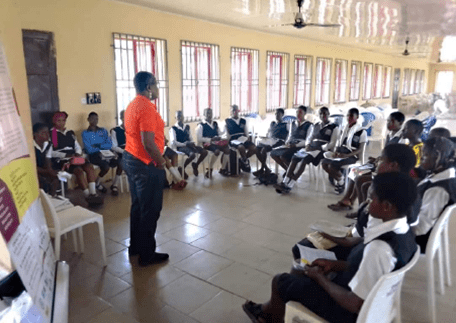
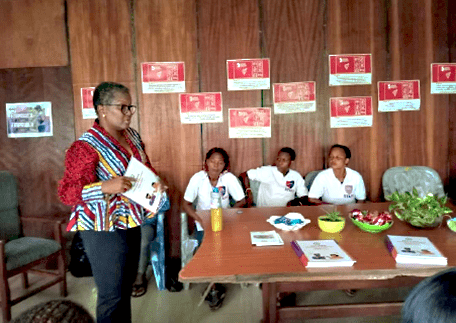
In the targeted communities where we work, our efforts have left a significant mark on the lives of numerous individuals. Through our dedicated training workshops, we’ve reached out to and positively influenced the lives of more than 200 school children and 150 women within three Local Government Areas, or LGAs. These workshops have served as a platform for empowerment and education, equipping participants with valuable skills and knowledge. Furthermore, our commitment to combating violence and human trafficking has led us to enlist the support of 50 ambassadors. These individuals, passionate and dedicated, stand as advocates for change within their communities, working tirelessly to raise awareness and prevent such atrocities from occurring. And, our impact extends beyond mere numbers. It encompasses the transformation of communities, the empowerment of individuals, and the fostering of a safer, more resilient society. Through collaboration, education, and advocacy, we strive to create lasting change and ensure a brighter future for all those we serve.
What is the severity of trafficking in your area and what are the long-term implications of sex trafficking, especially on women and girls?
In our targeted rural areas, child trafficking, especially sex trafficking, is distressingly prevalent. The lasting consequences for women and girls are profound. Apart from the immediate physical and psychological harm, survivors have to confront persistent hurdles like social stigma, recurrent victimization, and inadequate access to support systems. Many battle enduring mental health concerns, substance misuse, and obstacles to education and job opportunities. Moreover, the cycle of exploitation frequently persists, fostering ongoing cycles of poverty and susceptibility. At SOTHAWACA, we are dedicated to combating trafficking, championing survivors, and enacting holistic measures to tackle its underlying factors.
A significant number of young girls arriving here have been groomed and unknowingly trafficked abroad. Approximately 7 out of 10 girls in this scenario become victims of sexual exploitation. In these instances, parents believe their children are attending school, unaware that they have disappeared. The susceptibility to engage in sex work is notably high for girls because they are coerced into it. Many of them lack a true understanding of the extent of the commitments they enter into during those periods. We are currently working on a very sad case where a very young girl was trafficked out of the country under the guise of furthering her education. Upon arrival at her destination, the reverse was the case as she is now being sexually molested and exploited. We are currently doing a family tracing in order to reunite her with her family.
What kind of change do you want to see as a result of your work among the survivors of trafficking, or those who are most vulnerable to it?
We aim to increase parental awareness of human and sex trafficking to enhance the protection of their children, particularly girls. We strive for greater awareness and empowerment among women and children in the community to address human trafficking and child sexual exploitation. Additionally, we advocate for the involvement of more boys and men in our prevention campaigns to safeguard girls and women.
What kind of support do you need for your work?
To expand our outreach in preventing human trafficking, we require financial assistance to reach additional communities and schools with informative sessions. Additionally, we are in need of Information, Education, and Communication (IEC) materials containing prevention strategies for human trafficking, gender equality, and gender-based violence that we can distribute within our communities.
Where to send funding for your work?
To fund the work of SOTHAWACA, please email: sothawaca@gmail.com or sothawacabenin@yahoo.com, or visit: https://www.sothawaca.org.
To find out more about SOTHAWACA:
Visit SOTHAWACA on the web: SOTHAWACA
Visit SOTHAWACA on Facebook: SOTHAWACA
Visit SOTHAWACA on Instagram: SOTHAWACA
Visit SOTHAWACA on Twitter: SOTHAWACA
Visit SOTHAWACA on Youtube: SOTHAWACA
Ronke, Prsident and Founder of SOTHAWACA was interviewed by Liluye staff writer, Sylvia Nalubega, who also writes on her blog, Sanyu Centre for Arts and Rights. Sylvia’s personal message to everyone is, “We live beyond ourselves by sharing our story to hopefully impact a person.”
]]>Help Support our CAUSE.
Our Bank Details:
Beneficiary: Society to Heighten Awareness of Women and Children Abuse
Bank: First Bank Plc
Branch: Benin King Square
Account No: 2023749403
God loves a cheerful Giver.
PURPOSE/OBJECTIVE OF ACTIVITY: To ensure that participant from the three selected communities (Igarra, Enwan And Akuku) and other stakeholders, who are the constituents of the two groups (PMC and Volunteers) are trained on the sustainability plan of the project after its funding phase by T.Y Danjuma Foundation.
RECOMMENDATION(S) ACTION(S) TAKEN: Local Government should support implementation of this project towards ensuring ownership and sustainability of this project. The people of the three selected communities should invest selfless interest into the project that would engender sustainability.
]]>
community today.
The general situation in our society is that there is gender imbalance in all aspects of life. Generally, the boy child is given priority in all aspects of life. This has resulted in the escalating number of homeless girls, school drop-outs, child prostitution, rape and early marriages and pregnancies. A major concern is the health and education of the girl child which is put at risk with most girls dying of Maternal Mortality and HIV/AIDS at an
early age.
The empowerment frame work at grassroots level address pertinent social, economic and political issues affecting children especially the girl child in Illueha Community. The Enlightenment Campaign will go a long way in minimizing instances of abuse which have been swept under the carpet and directly undermine future women’s development. The Enlightenment Campaign has come at a right time when the nation and the whole world are also realizing the need to empower the girl child through education in order to achieve gender equality. There is also a definite need to build the capacity of especially the Illueha Community girl child to confront and resist sexual abuse and exploitation and to embrace economic empowerment as a tool towards complete freedom now and in the future. The general situation in our society is that there is gender imbalance in all aspects of life.
Generally, the boy child is given priority in all aspects of life. This has resulted in the escalating number of homeless girls, school drop-outs, child prostitution, rape and early marriages and pregnancies. A major concern is the health and education of the girl child which is put at risk with most girls dying of Maternal Mortality and HIV/AIDS at an early age. Although Nigeria has some very strong women’s organizations, there is no group that
works exclusively with school aged girls in and outside school and represent them and their issues.
assigned to the school by government, the Principal was able to get a Contract Teacher who takes the students 3 times a week during school days.
The challenge the young teacher has with the students is that when they come for lessons, a great majority of the students spend that period playing games on their allotted systems. The classroom is equipped with Computers enough to take 25 students at a time. There’s also a
Generator attached to that classroom to power electricity for both the computers and the internet facility provided by the SEEFOR Project.
We seized the opportunity to have an interactive session with the students who seem to be quite happy to have such a facility at their disposal. Their only complain was steady power supply.
]]>
]]>